
1. Identify the product, not just the brand
‘Please quote Coca-Cola’ is too broad. A brand can include different flavours, sugar-free versions, volumes and packaging formats. For Monster Energy wholesale, specify the flavour and market version too. Ask for a specification and current photographs of the goods being offered: a promotional image does not establish what is in stock.
- Full product name, flavour, volume and pack type: can, slim/fat can or PET bottle.
- The exact SKU’s EAN/GTIN barcode and stated manufacturing country.
- Available quantity, minimum order and whether different SKUs can share a shipment.
2. Check cases, pallets and truckload quantities
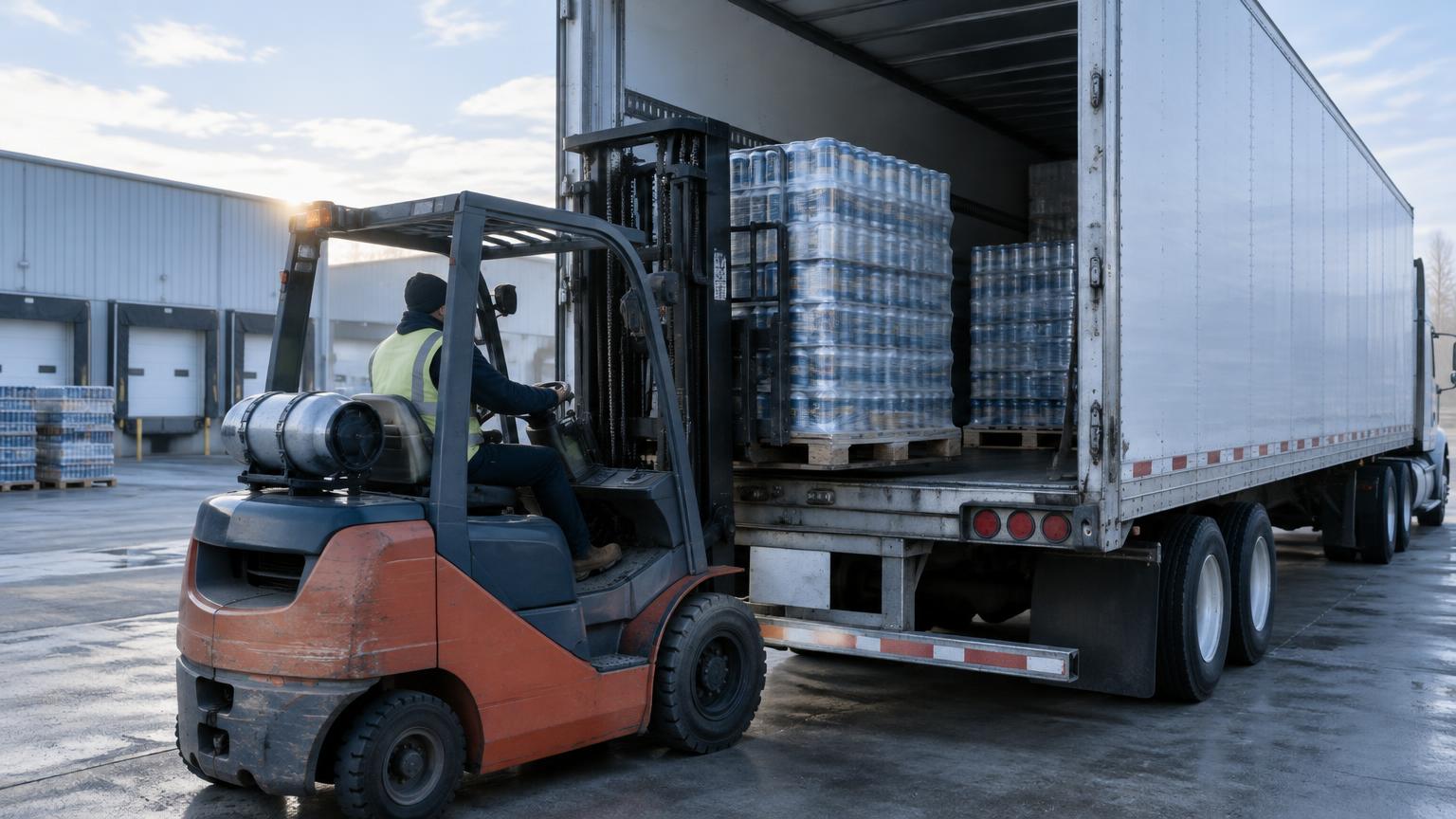
A unit price does not establish the shipment size. Confirm cans or bottles per case, cases per pallet and pallets per full truckload. These figures depend on the particular format: one SKU’s data should not be applied to every drink in the brand. Also clarify whether the MOQ means one pallet of one product or allows another configuration.
- Units per case × cases per pallet = units per pallet.
- Units per pallet × agreed pallet count = shipment quantity.
- Pallet dimensions, height and weight; pallet exchange or charges; warehouse unloading requirements.
3. Check label languages and remaining shelf life
Request photographs of every side of the label: which languages cover the ingredients, nutritional information and mandatory details? Is there an additional sticker, who applies it and does it meet the selling country’s rules? Packaging for one market is not necessarily ready for another. A barcode alone confirms neither label language nor manufacturing country.
Ask for the selected goods’ exact dates and minimum remaining life on receipt, not just total shelf life. An indication of around 12 months may describe the total life of some beverage formats, not a guaranteed balance at delivery. Once the main deal terms are agreed, stock with suitable dates is selected; record the specific requirement before confirming the order.
4. FCA: the buyer pays for main carriage
FCA means Free Carrier. Under Incoterms® 2020, the seller delivers to the carrier or other person nominated by the buyer at the agreed place. At the seller’s premises, the seller loads the buyer’s collecting vehicle; risk transfers at that delivery. The seller handles export clearance where applicable.
At another FCA named place, the seller brings the goods there on its vehicle and delivers them ready for unloading to the nominated carrier. State the precise place and handover point, not just ‘FCA Lithuania’. The buyer normally arranges and pays for main carriage from that point: an FCA goods price does not itself include delivery to the buyer’s warehouse.

5. EXW is not the same as FCA
EXW (Ex Works) means the seller makes the goods available at the named place, with no obligation to load the collecting vehicle or clear the goods for export. Risk transfers before loading, when the goods are placed at the buyer’s disposal. The buyer needs to plan loading, carriage and export formalities; FCA is often more practical for a cross-border deal. If the seller assists with EXW loading, separately agree that operation’s costs and risk.
6. If you need delivery to your warehouse
You can ask the supplier to quote transport. The offer should explicitly show whether freight is included in the total or listed separately. Assistance with transport does not automatically change FCA: agree who contracts the carrier, where risk transfers, whether insurance is needed and which delivery rule applies.
For context, under DAP the seller arranges carriage and bears risk to the named destination, with goods ready for unloading; unloading and import clearance with applicable charges fall to the buyer. Under DDP the seller also handles import clearance and applicable duties and taxes, but is not obliged to unload. These are explanations of options, not a promise that DDP is available for every destination: feasibility must be checked separately.
7. Compare the complete quotation
Incoterms allocate obligations, costs and risk; they do not set the price, payment method, transfer of ownership or shelf-life requirements. Those terms need separate agreement. Compare offers for matching SKUs, volumes and delivery points; establish the currency, applicable taxes, freight and additional charges, quotation validity and payment terms for a new customer.
- Which records are supplied: specification, invoice, packing list and applicable transport or export documents?
- Who is responsible for loading, unloading, clearance and insurance?
- How are availability, agreed expiry dates and the procedure for discrepancies confirmed?
Preparing your ATMFMCG enquiry
Send the product list, pallet quantities, destination country and address, plus label-language and remaining shelf-life requirements. State whether you need collection or a delivery quotation. ATMFMCG assesses each purchase individually: we confirm availability and packaging, discuss documents and quote transport on request, showing it clearly in the offer.
For recurring purchases or larger volumes, commercial terms and a possible price reduction are discussed individually; no automatic discount applies. The aim is a clear offer matched to your needs, not identical terms promised to every buyer. Select your SKUs in the catalogue or contact a manager to start the discussion.